
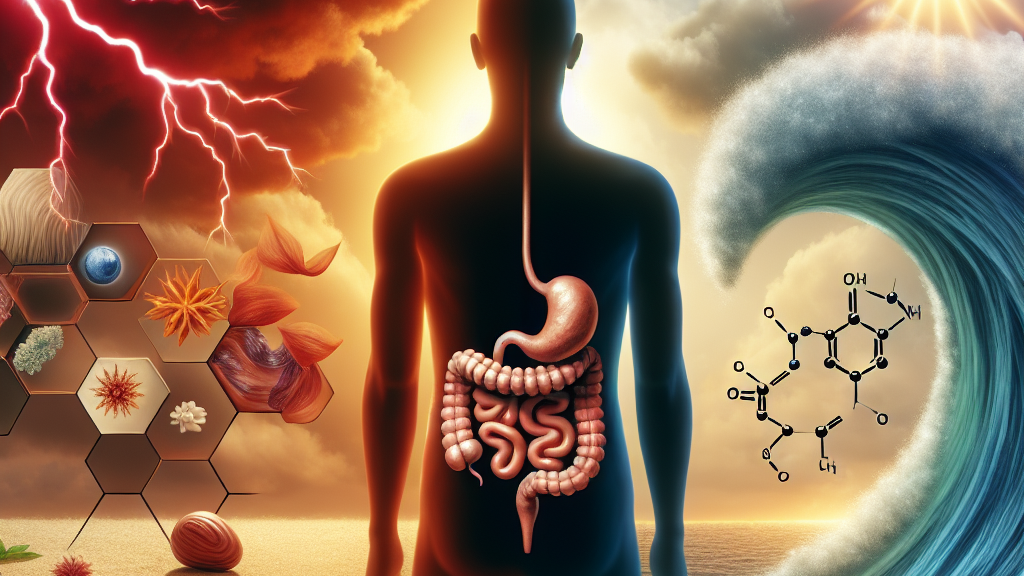
The Fascinating Journey of 'Gastronauts': Understanding How Gravity Impacts Health
A New Frontier in Microgravity Research
On November 11, 2024, MAPHEUS-15 became the 600th suborbital rocket launched from Sweden’s Esrange Space Center, marking a significant milestone in aerospace exploration. However, beyond the numbers and technical achievements, this mission held a unique experiment that had the scientific community buzzing—the "Gastronauts." In collaboration with the Swedish Space Corporation and the German Aerospace Center, researchers embarked on a mission to explore how microgravity affects human health, particularly focusing on gut health.
The launch provided seven brief yet invaluable minutes of weightlessness, a rare opportunity to observe biological processes that cannot be replicated on Earth. Among the 21 experiments on board were tiny vials of human gut cells, humorously dubbed “gastronauts” by the enthusiastic team at La Trobe University. These cells were grown on cutting-edge NanoMslides, allowing scientists to view them without the need for prior staining, thereby preserving their natural state for accurate analysis.
The Scientific Quest: Deciphering Gravity's Biological Role
The gastronaut experiment was spearheaded by Professor Patrick Humbert of the La Trobe Institute for Molecular Science, aiming to reveal how the absence of gravity influences cellular regeneration and cancer processes. This research is not just a leap in understanding cellular biology under different gravitational conditions; it is a step toward unraveling the mysteries of human physiology and health in space.
Conducting this experiment in microgravity acts as a precursor for future studies on how our bodies function in space. The researchers hope to gain insights into how gravity affects gut function and behavior—a critical consideration for long-duration space missions. This investigation aligns with broader scientific goals of understanding fundamental biological processes, which could lead to advancements in treating illnesses such as cancer back on Earth.
Microgravity's Implications for Future Healthcare
As researchers retrieve the experimental data and begin analysis, the potential implications for healthcare are vast. If successful, this pioneering experiment could open doors for new treatment methods and preventive measures that leverage our growing understanding of microgravity's effects on human health.
Moreover, the Gastronaut-01 mission exemplifies an innovative scientific collaboration, setting the stage for future international efforts to explore microgravity's impact extensively. The findings from such research could change how we approach medical challenges related to cell regeneration and potentially promote new avenues in cancer research and other fields.
In conclusion, as the gastronauts settle back on Earth and the data unfolds, the scientific community is poised for a wealth of insights that could transform not only medical treatment in space but also critical health interventions on our home planet. The partnership between La Trobe University, Enable Aerospace, and international space organizations highlights the immense potential of global cooperation in advancing our understanding of complex scientific phenomena.